Monthly Letter – June 2022

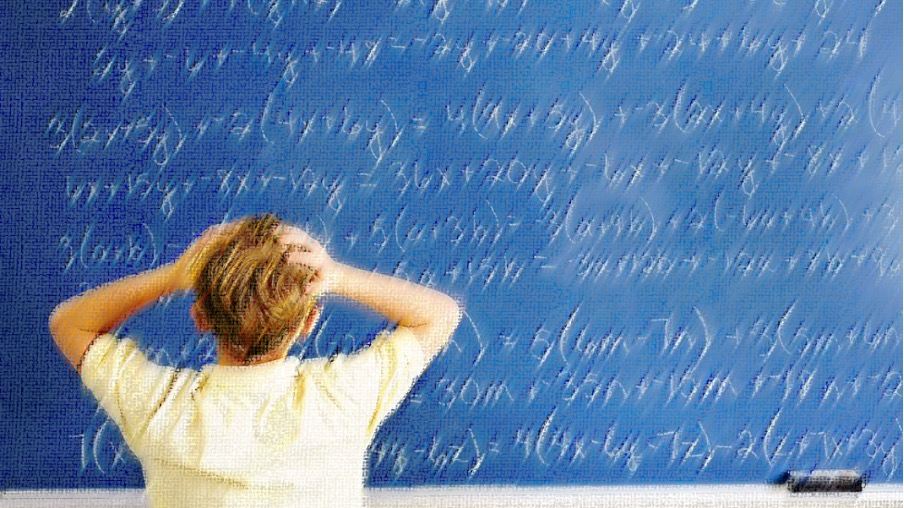
Do The Maths!

Dear Friends,

Maths. Maybe never your favourite subject at school. But one of the core curricular subjects. Always. No matter who you are, where you live, or what you want to do in life.

Maths is compulsory because it’s crucial. You need to learn the way it works. You need to learn to ‘do the maths’ – as the saying now succinctly makes the point.

The Bible is full of such maths. And a large part of living the Christian life involves us in learning ourselves to ‘do the maths’.

Think how the Lord harangued His embattled servant Job when He (the Lord) joined the ‘go-for-Job’s-jugular party’ rather late on? Remember the barrage of questions with which the poor man was hit?

“Where were you when I laid the earth’s foundation? .. Who marked off its dimensions? .. Who stretched a measuring line across it? .. Have you ever given orders to the morning? .. Have you journeyed to the springs of the sea…? .. Have the gates of death been shown to you? ..”

Have you? Can you? Do you? Question after question after question. Four long chapters. Almost 130 verses. But you can sum up the practical thrust of it all in three short words. Do. The. Maths.

Here’s how it works. You start with the relevant data.

Have you ever ..? Can you ..? Do you ..? Answer in each case – No!

But has the Lord? Yes! Can the Lord? Yes! Does the Lord? Yes!

Then you pull the data together. Not that complicated. You can’t: He can.

And you arrive at the correct conclusion. He’s God: and you, Job, you’re not. You’re not God, so don’t presume to be God: don’t presume for a moment that you somehow should be able all the time to understand what happens in the world. Sometimes you’ll get it. Sometimes you won’t. He’s God and you’re not. He’s Creator: you’re His creature. He pulls the strings: you don’t. You’re not in His league at all.

Do the maths. It’ll teach you a true humility.

Sometimes, though, the maths we’re called upon to ‘do’ is geared towards security more than mere humility. Isaiah, for instance, became (in chapter 40 of the book that bears his name) a part-time tutor in ‘maths’ for the Israelite faithful, with a view to their knowing both comfort, fresh strength and lasting reassurance in the face of all their waywardness and sin.

Again, a catalogue of questions from the Lord.

“Who has measured the waters in the hollow of His hand? .. Who can fathom the Spirit of the Lord, or instruct the Lord as His counsellor? .. With whom, then, will you compare God? .. Do you not know? Have you not heard? Has it not been told you from the beginning? ..’To whom will you compare Me? Or who is My equal?’ says the Holy One. Lift up your eyes and look to the heavens: who created all these? ..”

And so it goes on. Question after question after question. Gather the data. Do the maths. And come to the correct conclusion. Comfort, at the start of the chapter. Strength at the end of the chapter. Security in Christ. He knows what He’s doing. He holds the universe together. He can hold your life together when it feels like it’s falling apart.

It’s the same sort of ‘maths’ employed by the apostle Paul in another elevated, celebrated, and understandably much-loved passage, in Romans 8. Question after question again.

“If God is for us, who can be against us? .. Who will bring any charge against those whom God has chosen? .. Who is the one who condemns? .. Who shall separate us from the love of Christ?”

Do the maths, he’s saying, and you’ll see how secure you are in Jesus Christ. And once more the thing is bookended by the glorious application of your doing the maths. No condemnation, at the start of the chapter. No separation, at the end of the chapter. The absolute security believers have.

You do the maths. It’s an essential component of living the life of disciples.

It’s what the ‘men of Issachar’ were clearly good at too. Doing the maths. They were men, we’re told, ‘who understood the times and knew what Israel should do’ (1 Chron.12.32). It was basic Bible maths in which these men engaged: and they were good at it, they got their sums right. They lived at a time of transition in Israel’s life: a time when the man who’d been king, namely Saul, had been somewhat losing the plot and going to seed, while the man who’d defeated the giant, namely David, was gaining popularity. And a ‘blue corner – red corner’ contest between the two was surfacing fast.

Who should you back? Whose side should you join? Which way should you jump? What should you do? Where is the Lord in it all and how do you walk with Him?

Do the maths. Gather the data, work through the issues, come to the right conclusion. The men of Issachar were good at maths, and they knew what Israel should do.

They kept their eyes wide open to see what God was doing: put the pieces in place: and did their sums.

David was God’s anointed. David was Israel’s champion. David displayed a godly character. David was clearly being honoured by God. They did the maths: David was the one in whom the future lay: taking their stand with him was what Israel should do.

Doing the maths gave these men the clarity required.

Barnabas was the same. He was sent by the church in Jerusalem way up the coast to Antioch – largely because he was known as a man who was plainly good at maths. He did what the men of Issachar did: indeed, he did what Jesus Himself always did – he started by putting the pieces in place, discerning through all that was happening there what the Lord Himself was doing. Believers had been scattered. Antioch was strategic. The message was being spread. Gentiles were being saved – and that in significant numbers.

Do the maths, Barny boy! And his first line of working was right on the button. Jesus is for everyone: God is at work in wonderful grace: the Gentile mission’s begun!

So far, so good, in his doing the maths.

Line two of his working. People who come from the Gentile world must be taught gospel truth from the book whose roots are wholly Jewish. They need to be taught, they need to be taught well, they need to be taught in such a way that they’re able then to take the message and spread it right throughout the Gentile world. But they need to be taught from a book whose ethos is the polar opposite of Gentile.

And then line three of his working. Barnabas knew the man Saul. Knew of his background in Judaism. Knew of his training under Gamaliel. Knew of his brilliance as a student of the Word. Knew of his conversion on the road to Damascus. And knew also of his status as a citizen of Rome.

Go do the maths! Well, this man Barnabas was good at maths, drew the correct conclusion, and figured that a man who knew the Scriptures back to front, and at the same time was familiar with the culture of the Roman world – that man was the man of the moment so far as what the Lord was doing at Antioch was concerned. He did the maths and had the courage of his conviction to take what proved to be one of the giant steps of history: he went round the coast to Tarsus and hauled Saul back to Antioch.

The rest, as they say is history! But history’s shaped by the maths! Watching to see what is going on; discerning the grace of God at work; seeing what the Father is doing; drawing the right conclusions: and taking the next step of faith.

Spiritual ‘mathematics’. Always. You can see through the whole of the book of Acts the ‘spiritual mathematics’ that’s being done as the story of the early church unfolds.

From the ‘this’ (the remarkable scenes in Jerusalem as tongues as of fire seemed to rest on the disciples and the crowd all heard the message, each in their own language) – from the ‘this is that’ (the outpouring of the Spirit of God promised so many centuries previously by the prophet Joel) of Peter on the day of Pentecost: through to the conclusion which the somewhat frustrated apostle Paul would later draw as he ate his morning porridge (or whatever he had for his breakfast) that the Lord had called him to preach the gospel in Europe: which he then went and did, packing his bags, taking the ferry and opening up a whole new continent to the gospel.

These were all believers who, tutored by the Holy Spirit, had learned to do the maths. And yes, to do the maths: not just to get the right answers, but to act accordingly.

Maths, as I said at the outset, is a core curricular subject. This sort of spiritual ‘mathematics’. For every generation of Christ’s church. Ourselves, of course, included.

Here’s what I mean. Like Barnabas at Antioch, we’re simply concerned at the outset to see ‘what the grace of God has done’. And not the least of the things, of course, which the Lord in His grace has done in the past few years is His giving us the building we have and locating us emphatically here.

The way that came about bore all the gracious hallmarks of a sovereign act of God.

The very fact that the building was offered for sale. And to us. And without going onto the public market. And for a price substantially less than that at which it had previously been valued.

The extraordinary way in which the money was raised. A few short weeks to find a huge, big sum (£750,000). And on the day when the money was due to be paid, our having to hand almost precisely the required amount – £754,000.

This was clearly a work of God’s grace: His doing, and wonderful in our eyes. The Lord planted us here. Fronting onto Union Street. He’ll have had His reasons for doing so; we know that, for we know that He is sovereign, wise and altogether good, and nothing’s ever random in the things He does: so He plainly meant us to be located here. On the complicated chess-board of His story, He carefully placed this body of His people on this ‘square’: because, like some great master of the strategies of chess, He’s always, in the moves He presently makes, a good few moves ahead of the game.

‘A few moves ahead’ translates to a few years down the line.

And here we now are on the back of the Covid pandemic, with the central street of Aberdeen hit hard by all the harsh restrictions there have been: some 40 or more former shopfronts now boarded up: a ghost town in the making: the heart of the city in need of ‘regeneration’. And one solitary church that’s still fronting onto Union Street: a church at the core of whose message is the need for a regeneration, and the promise that in the Lord Jesus it’s a radical regeneration He’s so able and pleased to effect.

Another line of ‘workings’ to be fed into the sums we have to do. And then, more recent still, a third, significant factor to be noted down: the relocation from Tullos to an office block on Union Street of a very substantial workforce, as Shell, along with a couple of other smaller but expanding local energy companies, comes to town. A business population at this end of town increased overnight by the infusion of perhaps another 2,000 people.

Our being sovereignly placed by the Lord at just the location we have. The Silver Fin and Capitol office blocks, quite literally ‘on our doorstep’.

Do the maths.

Providence, not coincidence, is a tenet of our faith. And so, we’re on the case and doing the sums. We’ve got a group of people now who’re working on the thing. Figuring out how best we bring the Spirit’s great regenerating grace in Jesus Christ to bear upon a city-centre street. Seeing how we serve in Jesus’ name this through-the-week community amongst whom we’ve been set. Discerning what new gospel opportunities this ‘providence’ affords in terms of making Jesus known.

God the great Creator is at work. Christ our Saviour King is forwarding His purpose through these days of great upheaval and of change. It’s for us to walk humbly with our God, to keep in step with the Spirit. And boldly, eagerly, expectantly to be doing the maths!

Yours in Christ Jesus our Lord,

Jeremy Middleton

Do The Maths!

Dear Friends,

Maths. Maybe never your favourite subject at school. But one of the core curricular subjects. Always. No matter who you are, where you live, or what you want to do in life.

Maths is compulsory because it’s crucial. You need to learn the way it works. You need to learn to ‘do the maths’ – as the saying now succinctly makes the point.

The Bible is full of such maths. And a large part of living the Christian life involves us in learning ourselves to ‘do the maths’.

Think how the Lord harangued His embattled servant Job when He (the Lord) joined the ‘go-for-Job’s-jugular party’ rather late on? Remember the barrage of questions with which the poor man was hit?

“Where were you when I laid the earth’s foundation? .. Who marked off its dimensions? .. Who stretched a measuring line across it? .. Have you ever given orders to the morning? .. Have you journeyed to the springs of the sea…? .. Have the gates of death been shown to you? ..”

Have you? Can you? Do you? Question after question after question. Four long chapters. Almost 130 verses. But you can sum up the practical thrust of it all in three short words. Do. The. Maths.

Here’s how it works. You start with the relevant data.

Have you ever ..? Can you ..? Do you ..? Answer in each case – No!

But has the Lord? Yes! Can the Lord? Yes! Does the Lord? Yes!

Then you pull the data together. Not that complicated. You can’t: He can.

And you arrive at the correct conclusion. He’s God: and you, Job, you’re not. You’re not God, so don’t presume to be God: don’t presume for a moment that you somehow should be able all the time to understand what happens in the world. Sometimes you’ll get it. Sometimes you won’t. He’s God and you’re not. He’s Creator: you’re His creature. He pulls the strings: you don’t. You’re not in His league at all.

Do the maths. It’ll teach you a true humility.

Sometimes, though, the maths we’re called upon to ‘do’ is geared towards security more than mere humility. Isaiah, for instance, became (in chapter 40 of the book that bears his name) a part-time tutor in ‘maths’ for the Israelite faithful, with a view to their knowing both comfort, fresh strength and lasting reassurance in the face of all their waywardness and sin.

Again, a catalogue of questions from the Lord.

“Who has measured the waters in the hollow of His hand? .. Who can fathom the Spirit of the Lord, or instruct the Lord as His counsellor? .. With whom, then, will you compare God? .. Do you not know? Have you not heard? Has it not been told you from the beginning? ..’To whom will you compare Me? Or who is My equal?’ says the Holy One. Lift up your eyes and look to the heavens: who created all these? ..”

And so it goes on. Question after question after question. Gather the data. Do the maths. And come to the correct conclusion. Comfort, at the start of the chapter. Strength at the end of the chapter. Security in Christ. He knows what He’s doing. He holds the universe together. He can hold your life together when it feels like it’s falling apart.

It’s the same sort of ‘maths’ employed by the apostle Paul in another elevated, celebrated, and understandably much-loved passage, in Romans 8. Question after question again.

“If God is for us, who can be against us? .. Who will bring any charge against those whom God has chosen? .. Who is the one who condemns? .. Who shall separate us from the love of Christ?”

Do the maths, he’s saying, and you’ll see how secure you are in Jesus Christ. And once more the thing is bookended by the glorious application of your doing the maths. No condemnation, at the start of the chapter. No separation, at the end of the chapter. The absolute security believers have.

You do the maths. It’s an essential component of living the life of disciples.

It’s what the ‘men of Issachar’ were clearly good at too. Doing the maths. They were men, we’re told, ‘who understood the times and knew what Israel should do’ (1 Chron.12.32). It was basic Bible maths in which these men engaged: and they were good at it, they got their sums right. They lived at a time of transition in Israel’s life: a time when the man who’d been king, namely Saul, had been somewhat losing the plot and going to seed, while the man who’d defeated the giant, namely David, was gaining popularity. And a ‘blue corner – red corner’ contest between the two was surfacing fast.

Who should you back? Whose side should you join? Which way should you jump? What should you do? Where is the Lord in it all and how do you walk with Him?

Do the maths. Gather the data, work through the issues, come to the right conclusion. The men of Issachar were good at maths, and they knew what Israel should do.

They kept their eyes wide open to see what God was doing: put the pieces in place: and did their sums.

David was God’s anointed. David was Israel’s champion. David displayed a godly character. David was clearly being honoured by God. They did the maths: David was the one in whom the future lay: taking their stand with him was what Israel should do.

Doing the maths gave these men the clarity required.

Barnabas was the same. He was sent by the church in Jerusalem way up the coast to Antioch – largely because he was known as a man who was plainly good at maths. He did what the men of Issachar did: indeed, he did what Jesus Himself always did – he started by putting the pieces in place, discerning through all that was happening there what the Lord Himself was doing. Believers had been scattered. Antioch was strategic. The message was being spread. Gentiles were being saved – and that in significant numbers.

Do the maths, Barny boy! And his first line of working was right on the button. Jesus is for everyone: God is at work in wonderful grace: the Gentile mission’s begun!

So far, so good, in his doing the maths.

Line two of his working. People who come from the Gentile world must be taught gospel truth from the book whose roots are wholly Jewish. They need to be taught, they need to be taught well, they need to be taught in such a way that they’re able then to take the message and spread it right throughout the Gentile world. But they need to be taught from a book whose ethos is the polar opposite of Gentile.

And then line three of his working. Barnabas knew the man Saul. Knew of his background in Judaism. Knew of his training under Gamaliel. Knew of his brilliance as a student of the Word. Knew of his conversion on the road to Damascus. And knew also of his status as a citizen of Rome.

Go do the maths! Well, this man Barnabas was good at maths, drew the correct conclusion, and figured that a man who knew the Scriptures back to front, and at the same time was familiar with the culture of the Roman world – that man was the man of the moment so far as what the Lord was doing at Antioch was concerned. He did the maths and had the courage of his conviction to take what proved to be one of the giant steps of history: he went round the coast to Tarsus and hauled Saul back to Antioch.

The rest, as they say is history! But history’s shaped by the maths! Watching to see what is going on; discerning the grace of God at work; seeing what the Father is doing; drawing the right conclusions: and taking the next step of faith.

Spiritual ‘mathematics’. Always. You can see through the whole of the book of Acts the ‘spiritual mathematics’ that’s being done as the story of the early church unfolds.

From the ‘this’ (the remarkable scenes in Jerusalem as tongues as of fire seemed to rest on the disciples and the crowd all heard the message, each in their own language) – from the ‘this is that’ (the outpouring of the Spirit of God promised so many centuries previously by the prophet Joel) of Peter on the day of Pentecost: through to the conclusion which the somewhat frustrated apostle Paul would later draw as he ate his morning porridge (or whatever he had for his breakfast) that the Lord had called him to preach the gospel in Europe: which he then went and did, packing his bags, taking the ferry and opening up a whole new continent to the gospel.

These were all believers who, tutored by the Holy Spirit, had learned to do the maths. And yes, to do the maths: not just to get the right answers, but to act accordingly.

Maths, as I said at the outset, is a core curricular subject. This sort of spiritual ‘mathematics’. For every generation of Christ’s church. Ourselves, of course, included.

Here’s what I mean. Like Barnabas at Antioch, we’re simply concerned at the outset to see ‘what the grace of God has done’. And not the least of the things, of course, which the Lord in His grace has done in the past few years is His giving us the building we have and locating us emphatically here.

The way that came about bore all the gracious hallmarks of a sovereign act of God.

The very fact that the building was offered for sale. And to us. And without going onto the public market. And for a price substantially less than that at which it had previously been valued.

The extraordinary way in which the money was raised. A few short weeks to find a huge, big sum (£750,000). And on the day when the money was due to be paid, our having to hand almost precisely the required amount – £754,000.

This was clearly a work of God’s grace: His doing, and wonderful in our eyes. The Lord planted us here. Fronting onto Union Street. He’ll have had His reasons for doing so; we know that, for we know that He is sovereign, wise and altogether good, and nothing’s ever random in the things He does: so He plainly meant us to be located here. On the complicated chess-board of His story, He carefully placed this body of His people on this ‘square’: because, like some great master of the strategies of chess, He’s always, in the moves He presently makes, a good few moves ahead of the game.

‘A few moves ahead’ translates to a few years down the line.

And here we now are on the back of the Covid pandemic, with the central street of Aberdeen hit hard by all the harsh restrictions there have been: some 40 or more former shopfronts now boarded up: a ghost town in the making: the heart of the city in need of ‘regeneration’. And one solitary church that’s still fronting onto Union Street: a church at the core of whose message is the need for a regeneration, and the promise that in the Lord Jesus it’s a radical regeneration He’s so able and pleased to effect.

Another line of ‘workings’ to be fed into the sums we have to do. And then, more recent still, a third, significant factor to be noted down: the relocation from Tullos to an office block on Union Street of a very substantial workforce, as Shell, along with a couple of other smaller but expanding local energy companies, comes to town. A business population at this end of town increased overnight by the infusion of perhaps another 2,000 people.

Our being sovereignly placed by the Lord at just the location we have. The Silver Fin and Capitol office blocks, quite literally ‘on our doorstep’.

Do the maths.

Providence, not coincidence, is a tenet of our faith. And so, we’re on the case and doing the sums. We’ve got a group of people now who’re working on the thing. Figuring out how best we bring the Spirit’s great regenerating grace in Jesus Christ to bear upon a city-centre street. Seeing how we serve in Jesus’ name this through-the-week community amongst whom we’ve been set. Discerning what new gospel opportunities this ‘providence’ affords in terms of making Jesus known.

God the great Creator is at work. Christ our Saviour King is forwarding His purpose through these days of great upheaval and of change. It’s for us to walk humbly with our God, to keep in step with the Spirit. And boldly, eagerly, expectantly to be doing the maths!

Yours in Christ Jesus our Lord,

Jeremy Middleton